
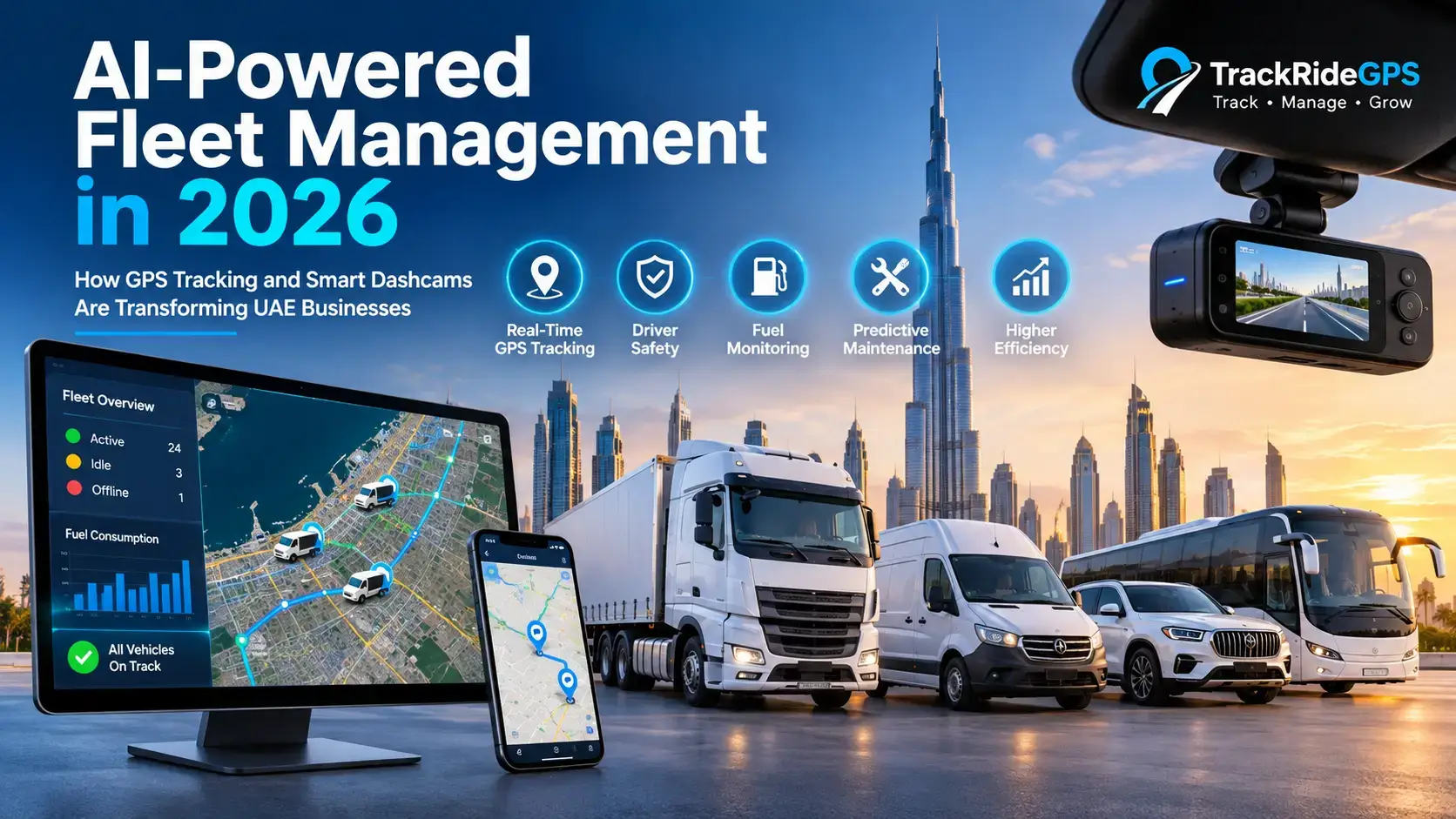
Managing a fleet of vehicles has become increasingly challenging for businesses operating across the UAE. Rising fuel expenses, delivery expectations, driver safety concerns and growing operational costs make it difficult for fleet managers to maintain efficiency while remaining competitive. Traditional vehicle management methods are no longer sufficient for businesses that want better visibility and control over their operations.
In 2026, AI-powered fleet management is changing how companies monitor vehicles, manage drivers and make operational decisions. Modern GPS tracking systems, intelligent dashcams, fuel monitoring sensors and connected telematics platforms allow businesses to understand what is happening across their fleets in real time.
From logistics companies in Dubai to construction businesses in Abu Dhabi and transport operators across the UAE, smart fleet technology is becoming an important part of daily operations. Businesses can monitor vehicle locations, identify unsafe driving patterns, review incidents, analyze fuel consumption and improve overall fleet performance through a centralized platform.
In this guide, we explore the latest fleet management technologies, their practical benefits and how UAE businesses can use intelligent GPS tracking solutions to improve safety, productivity and profitability.
What Is AI-Powered Fleet Management?
AI-powered fleet management combines GPS tracking, vehicle telematics, artificial intelligence and data analytics to help businesses manage their vehicles more effectively. Instead of relying only on manual reports or occasional vehicle inspections, managers can access real-time information and automated insights from connected devices.
A modern fleet management platform can collect information from GPS trackers, vehicle sensors, onboard diagnostics systems and dashcams. This information helps managers understand vehicle movements, driver behaviour, fuel consumption and maintenance requirements.
For example, a logistics company managing 50 delivery vehicles can use a centralized tracking dashboard to identify which vehicles are active, which drivers are taking unnecessary routes and whether deliveries are running behind schedule.
When intelligent analytics are available, the system can also help identify unusual patterns, highlight potential operational problems and support better decision-making.
AI does not replace the need for experienced fleet managers. Instead, it provides useful information that allows them to make faster and more informed decisions.
Why UAE Businesses Are Investing in Smart Fleet Management
The UAE has a diverse transportation and logistics sector. Businesses operate delivery vans, commercial trucks, passenger buses, construction machinery, luxury vehicles and specialized transport fleets across different environments.
Managing these vehicles requires more than knowing their current locations. Companies also need to control operating expenses, maintain driver accountability, protect valuable assets and meet applicable transport requirements.
Several factors are increasing the demand for intelligent fleet management solutions.
1. Rising Fuel and Operational Expenses
Fuel is one of the most significant recurring expenses for many transportation businesses. Unnecessary driving, excessive idling, inefficient routes and unauthorized fuel usage can increase monthly operating costs.
Smart fuel monitoring systems help businesses understand how much fuel each vehicle consumes. Managers can review fuel levels, identify unusual drops, monitor refills and compare consumption patterns between vehicles.
When fuel monitoring is combined with GPS tracking, businesses gain a clearer picture of where fuel is being consumed and how driving behaviour affects efficiency.
Explore Track Ride GPS Fuel Monitoring Solutions to learn how connected fuel sensors and tracking technology can improve fleet fuel management.
2. Greater Focus on Driver Safety
Driver safety is essential for businesses that operate vehicles throughout the day. Speeding, distracted driving, harsh braking and fatigue can increase accident risks and create unnecessary expenses.
Modern telematics systems help fleet managers identify risky driving behaviour through vehicle data and video monitoring. Managers can review driving patterns, investigate incidents and provide targeted feedback to drivers.
Instead of waiting for an accident or customer complaint, businesses can use this information to encourage safer driving practices.
3. Increasing Customer Expectations
Customers expect deliveries and transportation services to be reliable. Delayed shipments, poor communication and missed delivery windows can damage business relationships.
GPS fleet tracking gives managers real-time visibility into vehicle movements and estimated arrival times. This makes it easier to coordinate drivers, respond to delays and provide customers with more accurate delivery updates.
Top Fleet Management Technology Trends in 2026
Fleet technology is moving beyond basic vehicle location monitoring. Businesses are increasingly combining multiple connected systems to create a more complete picture of their operations.
1. AI-Powered Dashcams and Video Telematics
One of the most important developments in fleet management is the growing use of video telematics.
Traditional dashcams record road footage for reviewing incidents after they happen. Modern connected dashcams can offer additional capabilities, including live video streaming, event detection, cloud storage and driver behaviour monitoring.
Depending on the hardware and configuration, AI-enabled systems can identify potential safety risks such as driver distraction, fatigue indicators and unsafe driving events.
These features help fleet managers investigate incidents, understand driving conditions and provide more effective driver coaching.
For example, if a delivery vehicle experiences harsh braking, the system may automatically record the relevant footage. A manager can then review the event and determine whether it was caused by traffic conditions, unsafe following distance or another factor.
Key benefits include:
- High-definition road and cabin video recording.
- Live video access on supported devices.
- Automatic event-based video recording.
- Cloud-based footage storage.
- Driver behaviour monitoring.
- Better incident investigation and documentation.
Track Ride GPS provides advanced dashcam solutions designed to improve fleet visibility, accountability and road safety across the UAE.
2. Real-Time GPS Vehicle Tracking
Real-time GPS tracking remains the foundation of modern fleet management. It allows businesses to monitor vehicle locations through an online dashboard or mobile application.
Managers can see where vehicles are travelling, review previous routes, check vehicle movement and receive notifications about important events.
For businesses with multiple vehicles, this technology reduces the need for constant phone calls and manual location updates.
Useful GPS tracking features include:
- Live vehicle location monitoring.
- Historical route playback.
- Speed and movement alerts.
- Geofencing notifications.
- Unauthorized movement alerts.
- Mobile access to fleet information.
Geofencing is particularly useful for companies operating within specific service areas. Managers can create virtual boundaries around warehouses, offices, customer locations and restricted zones. The system can notify them when a vehicle enters or leaves a designated area.
3. Smart Fuel Monitoring and Theft Detection
Fuel monitoring technology is becoming increasingly important for companies managing large vehicle fleets.
Manual fuel records do not always provide an accurate picture of actual consumption. Differences between reported refills, vehicle usage and recorded expenses can make it difficult to identify wastage.
Connected fuel sensors and compatible vehicle data systems provide more detailed information about fuel levels and consumption.
Fleet managers can use this information to:
- Monitor fuel levels in real time.
- Identify sudden or unusual fuel drops.
- Review refilling activities.
- Compare consumption across vehicles.
- Investigate possible fuel theft.
- Identify inefficient driving patterns.
Combining fuel monitoring with GPS tracking provides additional context. Managers can compare fuel consumption with vehicle routes, operating hours and driving behaviour.
4. Predictive Vehicle Maintenance
Unexpected vehicle breakdowns can disrupt deliveries, increase repair expenses and affect customer satisfaction.
Vehicle telematics and diagnostic technologies can help businesses identify warning signs before minor issues become major operational problems.
CAN Bus and OBD solutions can provide access to supported vehicle information, including engine diagnostics, fault codes and performance data.
Depending on vehicle compatibility and available sensors, fleet managers can use this information to monitor engine health, identify diagnostic warnings and plan maintenance more effectively.
For example, if a vehicle repeatedly generates an engine warning, the maintenance team can investigate the problem before it causes a more serious breakdown.
Predictive maintenance is not simply about reducing repair costs. It also helps improve vehicle availability and fleet planning.
5. Driver Identification and Accountability
In companies where multiple employees operate the same vehicles, identifying the responsible driver can be challenging.
Driver identification technology using RFID cards or iButton devices can associate vehicle activity with individual drivers.
This creates a clearer record of who operated a particular vehicle and when the journey took place.
Businesses can use driver identification alongside GPS tracking and telematics reports to improve accountability, investigate incidents and evaluate driving performance.
This is especially useful for transport companies, logistics operators, school bus services and organizations with rotating drivers.
How Smart GPS Tracking Improves Logistics and Transport Operations
Logistics businesses depend on timely deliveries, efficient route planning and accurate vehicle coordination. Even small operational inefficiencies can create significant problems when a company manages dozens or hundreds of vehicles.
A connected GPS fleet management system helps managers coordinate transportation activities through centralized monitoring.
Better Route Planning
GPS tracking provides visibility into vehicle locations and previous journeys. Managers can use this information to review routes, identify unnecessary mileage and improve future dispatch planning.
Efficient route planning can help reduce travel time, fuel consumption and avoidable delays. Actual route recommendations should also account for road conditions, traffic restrictions, delivery priorities and vehicle requirements.
Improved Delivery Visibility
Customers increasingly expect accurate information about their deliveries. Real-time vehicle tracking helps businesses understand where shipments are and whether deliveries are progressing according to schedule.
Depending on platform capabilities, businesses can also use automated notifications and estimated arrival information to improve customer communication.
Better Fleet Utilization
Some businesses experience situations where certain vehicles remain underused while others handle excessive workloads.
GPS tracking and fleet reports help managers compare vehicle utilization, operating hours and journey patterns. This information can support better vehicle allocation and scheduling decisions.
Companies can explore Logistics and Transport Tracking Solutions from Track Ride GPS to improve vehicle visibility and transport coordination.
Which Industries Can Benefit from AI-Powered Fleet Management?
Intelligent tracking technology is useful across many industries. Different businesses may require different combinations of GPS devices, sensors, cameras and reporting tools.
Logistics and Delivery Companies
Delivery businesses can monitor vehicles, coordinate drivers, review routes and improve delivery visibility. GPS tracking and transport management tools help managers maintain better control over daily operations.
Construction and Heavy Equipment Businesses
Construction companies often manage expensive machinery across multiple sites. Heavy equipment tracking helps monitor machinery locations, operating hours and unauthorized movement.
Geofencing and movement alerts can provide additional protection against equipment theft and unauthorized use.
School and Staff Transportation
Schools and organizations responsible for passenger transportation need reliable vehicle monitoring and driver accountability.
GPS tracking, route history and compatible dashcam systems can help improve visibility and support safer transport operations.
Desert Safari and Tourism Operators
Desert safari businesses operate in environments where route visibility and vehicle coordination are especially important.
GPS tracking helps operators monitor safari vehicles, coordinate convoys and maintain better visibility of vehicles travelling through remote areas.
Luxury Vehicle Owners and Dealerships
High-value vehicles require additional security and monitoring. GPS tracking systems can provide location updates, unauthorized movement alerts and historical journey information.
These features are useful for luxury car owners, vehicle rental companies and businesses managing premium vehicle inventories.
Marine and Temperature-Controlled Transport
Businesses operating boats, yachts and other vessels can benefit from marine tracking technology.
Similarly, companies transporting food, pharmaceuticals and other temperature-sensitive products can use connected temperature and humidity sensors to monitor environmental conditions during transportation.
How to Choose the Right GPS Fleet Management System
Choosing a fleet tracking system requires more than comparing device prices. Businesses should consider their operational requirements, vehicle types, reporting needs and future expansion plans.
Before selecting a solution, consider the following factors:
1. Understand Your Fleet Requirements
Start by identifying how many vehicles or assets need monitoring. Consider whether you operate cars, motorcycles, delivery vans, trucks, buses, construction equipment or marine vessels.
Different assets may require different tracking hardware and installation methods.
2. Check Real-Time Tracking Capabilities
Make sure the platform provides reliable location monitoring, route history, useful notifications and convenient access through desktop and mobile devices.
3. Evaluate Reporting and Analytics
Useful reports should help managers understand vehicle usage, driver behaviour, fuel consumption and operational performance.
Look for a platform that presents information clearly and allows managers to identify areas that need attention.
4. Consider Dashcam and Sensor Integration
If driver safety is a priority, consider adding compatible dashcam technology. Businesses with high fuel expenses may also benefit from dedicated fuel sensors.
CAN Bus, OBD and other compatible telematics integrations can provide additional vehicle information.
5. Check Local Support and Regulatory Requirements
Businesses operating in the UAE should verify that their selected tracking solution meets the requirements applicable to their vehicle category and operating authority.
Depending on the use case, relevant approvals and compliance requirements may involve SIRA, RTA, TDRA or other applicable authorities.
It is important to confirm the specific device, installation and reporting requirements before implementation. Not every GPS tracking device automatically provides regulatory compliance.
Why Choose Track Ride GPS for Fleet Management in the UAE?
Choosing the right technology partner is an important part of building a reliable fleet management operation. Businesses need dependable tracking hardware, practical reporting tools, professional installation and ongoing technical assistance.
Track Ride GPS Tracking Solutions provides vehicle tracking and telematics services for individual vehicle owners and commercial fleet operators across the UAE and wider GCC region.
With more than 10 years of GPS and fleet tracking experience and over 1,000 customers, Track Ride GPS offers solutions for different vehicle categories and business requirements.
Its services include:
- Real-time GPS vehicle tracking.
- Luxury vehicle tracking and security.
- Bike and motorcycle tracking.
- School bus and staff transport monitoring.
- Desert safari fleet tracking.
- AI-enabled and connected dashcam solutions.
- Fuel monitoring and theft detection.
- CAN Bus and OBD vehicle diagnostics.
- Construction equipment tracking.
- Driver identification systems.
- Logistics and transport fleet management.
- Marine and temperature monitoring.
The platform provides access to vehicle locations, route history, alerts and reporting through connected tracking solutions. Businesses can select services according to their fleet size, industry and operational requirements.
Track Ride GPS also provides local technical assistance and support to help customers maintain their tracking systems after installation.
The Future of Fleet Management: Moving Towards Intelligent Operations
Fleet management is moving towards more connected and data-driven operations. GPS tracking is no longer limited to displaying vehicle locations on a map. It is becoming part of a broader technology ecosystem that combines vehicle diagnostics, video intelligence, driver identification, fuel monitoring and operational reporting.
As AI capabilities continue to develop, fleet management platforms may provide increasingly useful insights into driver behaviour, maintenance requirements and operational inefficiencies.
Businesses should focus on practical improvements rather than adopting technology simply because it is new. The right solution should address real operational problems, provide useful information and support measurable business objectives.
For UAE companies managing vehicles, transport assets or commercial fleets, investing in modern GPS tracking and telematics can be an important step towards improving operational visibility and control.
Get Smarter Fleet Management Solutions with Track Ride GPS
Whether you manage a small number of vehicles or a large commercial fleet, having accurate information about your assets can make daily operations easier and more efficient.
Track Ride GPS offers customized vehicle tracking, fleet management and telematics solutions designed to support businesses across the UAE.
From real-time GPS monitoring and intelligent dashcams to fuel management and logistics tracking, its solutions help businesses improve visibility, strengthen vehicle security and make better operational decisions.
Contact the Track Ride GPS team to discuss your requirements and find a suitable tracking solution for your vehicles or business fleet.
Track Ride GPS Trading L.L.C
Dubai, United Arab Emirates
Phone: +971 55 2536553
Email: info@trackridegps.com
Website: https://trackridegps.com/
Take control of your fleet with smarter GPS tracking and intelligent fleet management solutions.